
A wellness menu can look impressive while the ordinary lunch available a few streets away tells a different story.
That is a useful test for the Caribbean’s growing interest in wellness. What does the sector offer the people who live here, buy food here and feed their families here? A retreat or specialist product may have a place, but so do the everyday decisions made by a school canteen, a food producer, a restaurant and a purchasing manager.
Food brings the wellness conversation into those ordinary settings. It makes affordability, supply and the quality of the offer questions the industry has to answer.
Look at the choices people actually have
In an April 2026 account of school food in Jamaica, the Pan American Health Organization describes how availability, marketing and practical constraints shape what children eat. It highlights the difficulty of bringing a cooked meal where suitable storage or reheating is unavailable, alongside the ready availability of packaged snacks and sugary drinks. The lesson extends beyond knowing what a healthier choice might be: the setting has to make that choice practical. PAHO’s account of school food in Jamaica
For a wellness business, that changes the starting question. Explaining a product’s benefits is only part of the work. Who can obtain it, at what price, and under what everyday conditions?
A business offering food might examine its most convenient purchase rather than its most elaborate menu item. A workplace might examine what is available during an ordinary lunch break. A school-food supplier might begin with the facilities that exist, rather than the ideal kitchen assumed by a proposed menu.
These are different settings. They share a need to design around real circumstances.
Give Caribbean food more precise attention
Treating “Caribbean food” as either the cause of a health problem or its complete solution is too broad to be useful.
An ingredient’s origin does not describe an entire meal, its preparation or the pattern in which someone eats it. Calling a food traditional cannot establish that it prevents disease. Calling it local cannot settle its nutritional quality.
A more useful editorial and commercial approach is to be specific about what is being served. Describe ingredients and preparation clearly. Explain the offer without turning a familiar food into an unsupported cure or suggesting that a region’s many food cultures can be reduced to a single healthy or unhealthy label.
That leaves room for cultural pride and for scrutiny. A product can have a meaningful Caribbean story while its claims, composition and suitability still need to be assessed on their merits.
Affordability belongs in the wellness brief
In its June 2024 announcement of dietary fiscal-policy guidance, WHO explains how prices and affordability can influence choices. The guidance covers taxes intended to discourage consumption of products contributing to unhealthy diets and subsidies or other support for healthier foods. WHO presents these as part of a broader set of public-health approaches, not as a single intervention that resolves every dietary problem. WHO guidance announcement via PAHO
That is a population-policy discussion. It should not be turned into a promise about an individual customer’s health or a claim that one measure will work identically in every Caribbean market.
It does, however, raise a practical challenge for the industry. A healthier offer that is consistently beyond the intended customer’s budget has an access problem. Businesses can examine pack sizes, procurement, preparation costs and their choice of sales channels without pretending they can solve household affordability alone.
The useful measure is whether the intended customer can choose the offer repeatedly, rather than only admire it.
Connect the kitchen with the producer
Food also gives the wellness economy a concrete relationship with agriculture.
Jamaica’s Tourism Enhancement Fund describes the Agri-Linkages Exchange programme through the Tourism Linkages Network’s tourism-agriculture work, connecting agricultural supply with tourism and related buyers. It provides a documented example of a mechanism linking producers and purchasers. It does not guarantee an order, establish that every local product is suitable, or prove that a supplier earns a better margin. TEF agriculture programme, TEF programme information
For a restaurant, hotel or food business considering a local supplier, the questions begin with the required specification, seasonal availability, delivery and payment arrangements. For the producer, the questions include whether the order can be supplied consistently and what it costs to do so.
Those details are where a local-sourcing ambition becomes a working relationship. A story about origin should be able to explain the relationship behind the purchase, rather than treating the producer as scenery.
Make the offer useful before making it medicinal
“Food as medicine” can become an expansive marketing phrase. A business should be clear about what it means and what it can substantiate.
A meal, an ingredient and a product advertised for a medical condition are different propositions. This article makes no treatment claim for any Caribbean food, botanical or diet. An individual’s nutrition and treatment decisions require advice appropriate to their health; a wellness message should not encourage them to stop prescribed care.
The industry has useful work to do without making a cure claim. It can improve the information available about an offer, examine the practical barriers to obtaining it and build more dependable relationships between kitchens and suppliers.
Those improvements are worth describing accurately. They do not need a medical promise to make them matter.
Judge the ordinary offer
A hypothetical hotel could host a well-designed wellness retreat while its everyday food service receives little attention. A hypothetical food producer could run a persuasive healthy-living campaign while making its product difficult to find or understand. Neither example is an allegation about a named business. They illustrate a gap worth examining between the message and the routine experience.
Closing that gap begins with manageable questions. Is the offer clear? Can the intended customer afford and obtain it? Do the claims match the evidence? Can suppliers meet the specification on workable terms? What feedback should change the next version?
The answers will differ across businesses. The commitment is to examine what happens after the campaign photograph.
A Caribbean wellness economy needs food businesses, producers and buyers in the conversation because they shape something people encounter every day. Its credibility will depend partly on how much care reaches that everyday offer.
Frequently asked questions
Does local or traditional automatically mean healthy?
No. Origin and cultural history do not establish the nutritional quality of an entire meal or justify a health claim.
Why discuss schools in a wellness-business article?
School food illustrates how practical conditions, availability and marketing can shape choices. It helps show why information alone is only part of the discussion.
Does supporting local farmers guarantee a better food offer?
No. Sourcing, nutritional quality, affordability and commercial viability need to be assessed separately.
Is this a diet or treatment plan?
No. It is an industry and public-policy discussion, with no individual meal plan, medicine change or promised health outcome.
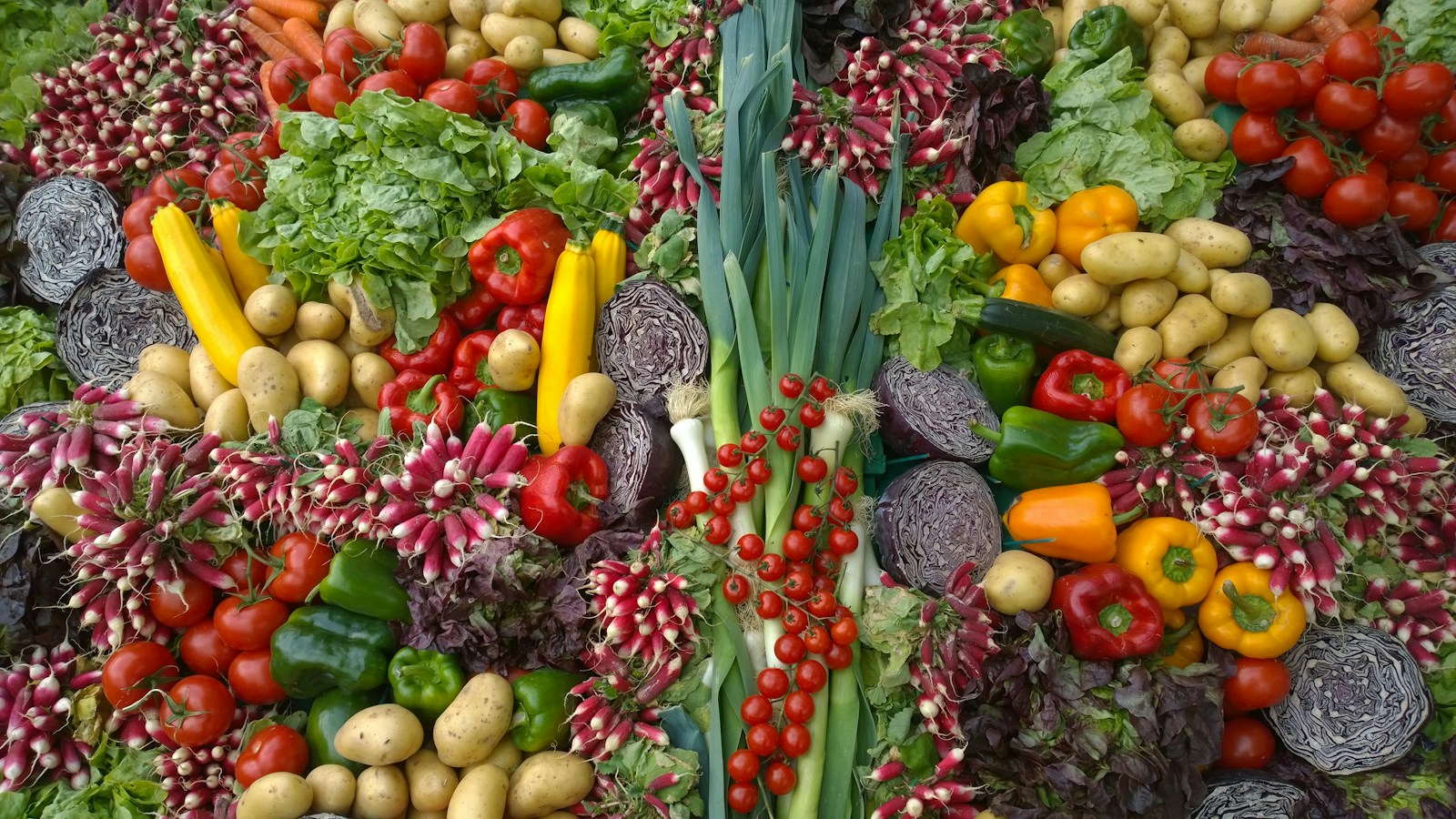
Featured image: Illustrative vegetable display in Chantilly, France. Photo: Chantal Garnier / Unsplash.