CANEX AT TEN / DOUGLAS K. GORDON
What Ten Years of CanEx Have Taught Me
I began with a question about the Caribbean’s place in cannabis. A decade of conversations, setbacks and change has made me more demanding about what comes next.
By Douglas K. Gordon
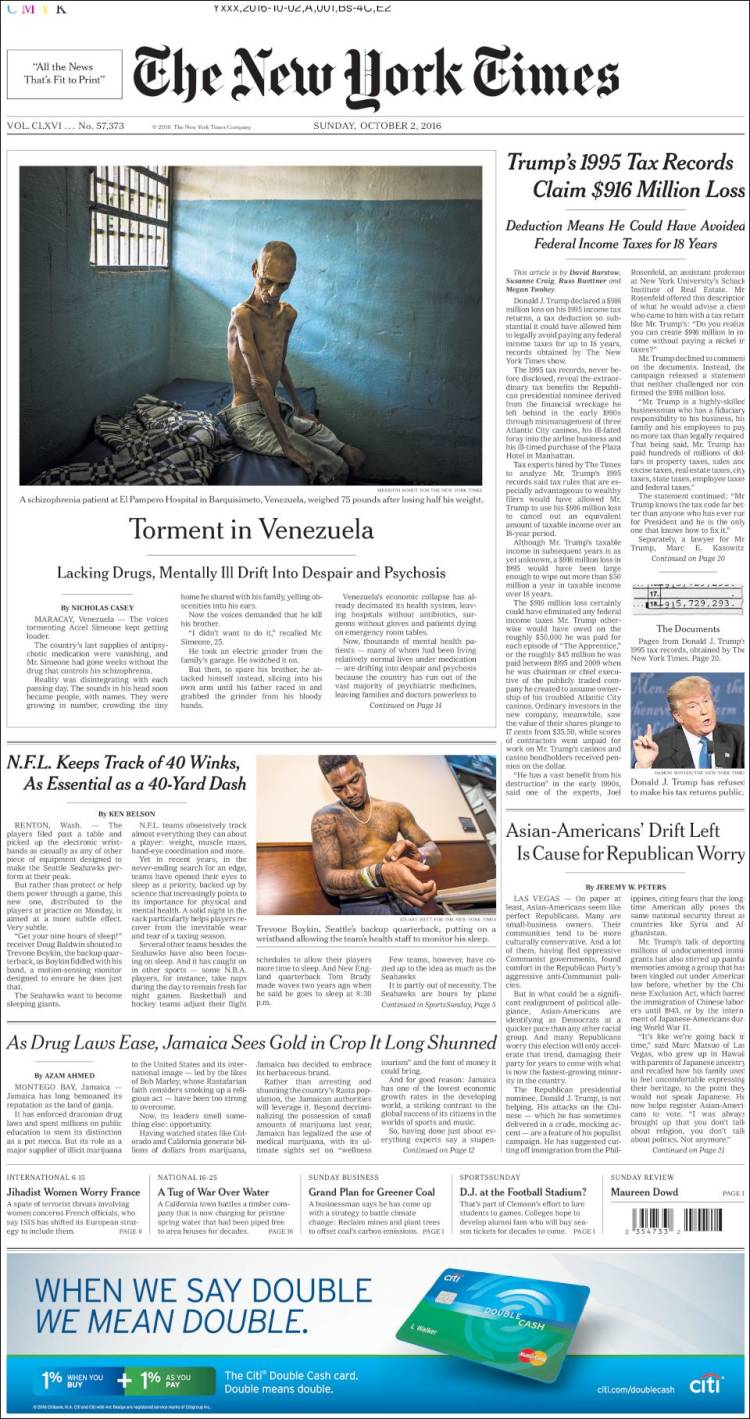
The New York Times, 2 October 2016.
The Jamaica industry report that covered the first CanEx conference is highlighted. © The New York Times Company.
When I started CanEx ten years ago, I believed Jamaica should be earning far more from cannabis than it did. The island had helped carry ganja into the world’s imagination. I wanted to know how that influence could become enterprise, income and opportunity here.
I still believe in that possibility. The difficulties have made me more impatient about what it will take to realise it.
When Jamaica announced the decriminalisation of ganja, one of the parallels I drew was with the steelpan. Trinidad and Tobago gave the world an extraordinary instrument. Listen to a steel orchestra at Panorama and the music can raise goosebumps on your arms. Nobody can question the creativity, skill or cultural ownership of that sound.
But cultural ownership does not automatically produce economic opportunity. Building businesses, protecting innovations and retaining value demand deliberate work. I worried that Jamaica could be celebrated for its contribution while capturing too little of the industry developing around it.
Cultural ownership does not automatically produce economic opportunity.
Through Rastafari, music and the reach of Jamaican culture, this small island had already done an extraordinary amount to shape the world’s relationship with cannabis. Bob Marley, Bunny Wailer and Peter Tosh advocated openly when doing so carried consequences. Long before investment presentations, people here were defending the plant’s place in their lives, culture and faith.
As legal industries emerged, I kept asking whether those people and places would have a meaningful share in the economic future. Then came the question I could act on: what could I contribute?
Bringing people together
Events were what I knew. I had always looked at the world through a Caribbean lens, and here was an opportunity that could matter to countries needing new sources of enterprise and employment.
Jamaica possessed tremendous working knowledge of the plant. Other jurisdictions were accumulating experience of operating within legal frameworks. CanEx could bring those forms of knowledge into the same room, alongside the disciplines needed to build an industry.
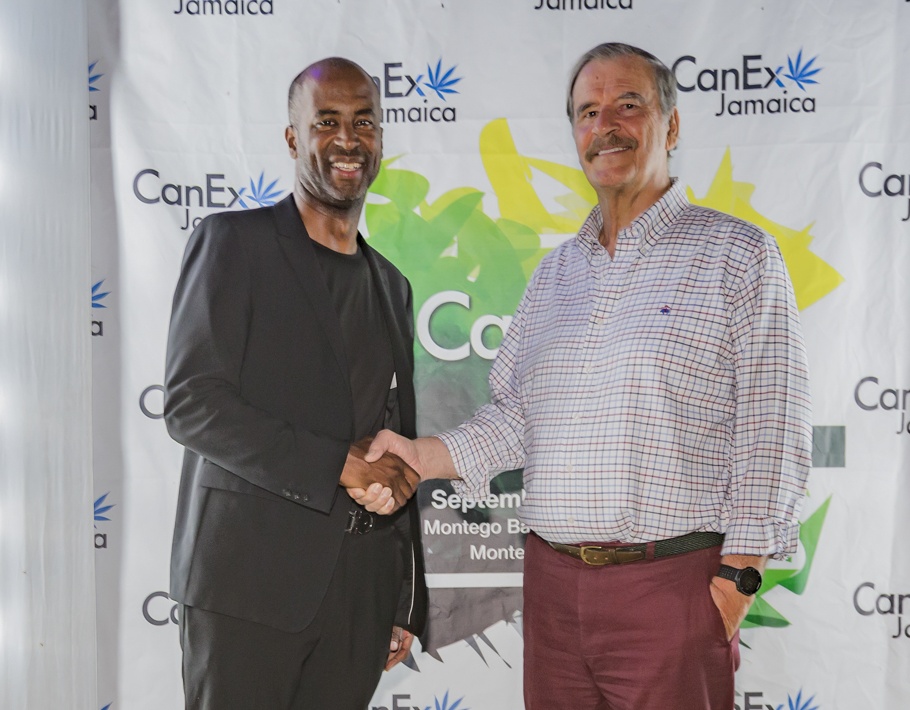
Douglas Gordon with Vicente Fox at a past CanEx event. CanEx archive.
We brought researchers, practitioners, investors and policymakers into that exchange. Bruce Linton could speak about the scale of the business opportunity; Dr Uma Dhanabalan could explain medical applications. We wanted people to leave with knowledge and relationships they could use.
No single perspective could answer every question. A grower understood cultivation; a doctor approached the patient; an investor asked what could sustain a business. Putting them together was meant to make the discussion more useful than any of us could make it alone. That remains the value I see in CanEx.
That ambition took CanEx into other Caribbean markets and international centres. Sustaining it was another matter. Sponsorship and fee revenues were difficult from the beginning. We kept finding ways to execute, through persistence, stubbornness and perhaps some misplaced optimism.
The cost of building
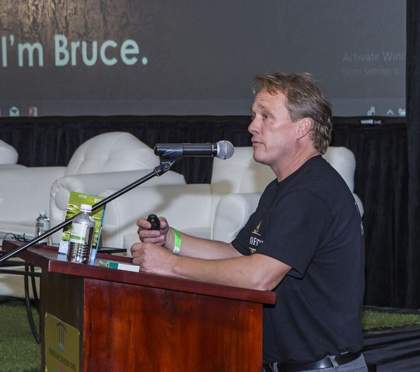
Bruce Linton speaking at CanEx, 2018. CanEx archive.
The operators faced a harder test. They committed money, land, time and reputation to businesses without a settled local roadmap. They had to build while the rules and institutions were taking shape.
Some businesses closed. Some people stepped away. Others remain heavily invested, frustrated and determined to make the numbers work. Their contribution deserves more than familiar praise for resilience. Those who left have as much to teach us as those who remain. Their losses should inform what changes next.
That experience has reinforced the importance of clear requirements, predictable processes and continuity for operators. Recent reforms are encouraging because they help businesses plan with greater confidence.
Rules that let people plan
The move to three-year cultivation authorisations and the ability to operate during licence extensions are practical improvements. They reinforce a lesson I keep returning to: the details of regulation decide whether people can plan, invest and build.
The CLA has to protect public safety and work within Jamaica’s international obligations. Nor can it solve financing or overseas demand on its own. Public safety, compliance and commercial viability all belong in the same conversation.
A room full of enthusiasm does not remove those obstacles. The work after a conference still has to happen: a partnership has to hold, financing has to arrive and a business has to find customers. Ten years has made me more conscious of the distance between a good conversation and a result.
Learning to listen
My own understanding changed too. I entered through the economic question: how could the Caribbean benefit? Learning more about Rastafari’s relationship with the plant deepened my appreciation of what people had endured to defend something sacred to them.
Participation had to mean something for the people whose knowledge and courage predated the legal industry. That became part of what kept me committed when the work was difficult.

Ras Iyah V and Dr Uma Dhanabalan, 2019. CanEx archive.
It also taught me patience with people encountering cannabis differently. We cannot expect one passionate conversation to undo beliefs absorbed over a lifetime. Sometimes it takes research, several conversations or a credible explanation. I have had to deepen my own understanding; other people deserve room to do the same.
Advocacy carries a responsibility to be accurate. Medical value depends on the preparation, condition and dose. Responsible use belongs in the conversation. Young people deserve particular protection: developing brains are vulnerable, and age, frequency of use and THC potency affect risk. We should acknowledge that plainly while explaining potential benefits with the same care.
I want an industry confident enough to challenge misinformation and honest enough to correct its own overstatements. That is how we earn trust.
More to build
There is real activity to build on, from licensed cultivation, processing and retail to exports of value-added products. That progress encourages me. It also brings me back to the question I started with: how can the people doing the work keep more of the value they create?
Some operators have found a way forward while others have lost heavily. Both experiences belong in an honest account of this decade. We should recognise the businesses being built without asking people who left to revise what happened to them.
I also see businesses improving their presentation and helping less experienced customers ask questions without feeling intimidated. New permit pathways may help more traditional and small growers enter the formal industry. What I have learned is to ask what follows entry: who will buy, and can the business last?
I have also learned to look beyond cultivation. Processing, research, product development and retail offer different ways to contribute. Keeping more of that work in Jamaica would give Jamaica’s cultural reputation a stronger commercial foundation, with skills and ownership that last.
That wider view of participation is shaping CanEx Caribbean Wellness Conference & Expo. Cannabis remains part of the conversation alongside mental health, nutrition, traditional knowledge and the businesses developing around wellbeing. The Caribbean has much to contribute, and I want CanEx to keep bringing people together to examine those possibilities seriously.
Ten years in, I remain convinced that Jamaica’s next chapter should give compliant operators a stronger foundation to grow. We need farmers with dependable buyers, profitable Jamaican businesses, skilled work and products that can compete beyond Jamaica. People should be able to build something they own, invest in its future and pass on more than the experience of having survived.
I started CanEx because I believed I could contribute something useful. A decade has made me more exacting about the result. Jamaica’s cultural contribution is already recognised around the world. Over the next decade, I want to help retain more lasting economic value in Jamaica.
ADVERTISEMENT
A DECADE OF CONNECTIONS

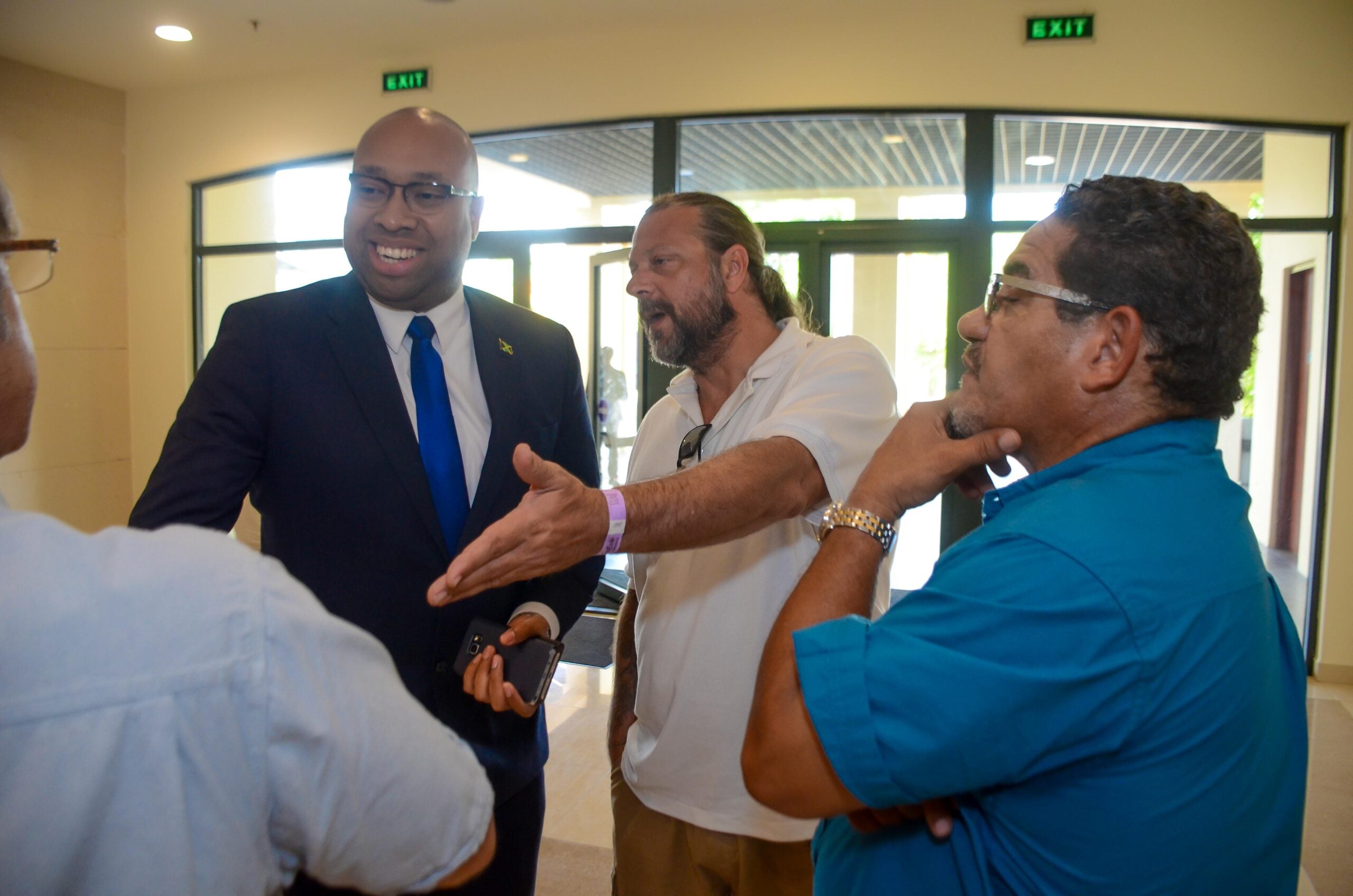
Caribbean Wellness
Conference & Expo
Summit Kingston
Kingston, Jamaica