
By CanEx
At a glance: Commercial use of traditional Caribbean plant knowledge raises questions about consent, control and who benefits. The Nagoya Protocol provides an international access-and-benefit-sharing framework, but countries’ participation and domestic rules differ. South Africa’s rooibos agreement offers a documented example of negotiated payments to knowledge-holding communities. It is a precedent to examine carefully, rather than a ready-made Caribbean solution.
Buying a plant and gaining permission to use a community’s knowledge are different transactions.
A botanical business may pay for leaves, roots or seeds while relying on knowledge that helped identify their possible uses. A purchase invoice records the material changing hands. It does not, by itself, explain who authorised the use of that knowledge or how its holders will participate in the results.
That is the commercial question behind the business of bush. Traditional knowledge deserves consideration at the start of a project, while research plans, permissions and relationships are still being shaped.
What the Nagoya Protocol Covers
The Nagoya Protocol was adopted in 2010 and entered into force in 2014. It supplements the Convention on Biological Diversity and concerns access to genetic resources and the fair sharing of benefits from their use. CBD overview
Its scope needs care. The Protocol defines the utilisation of genetic resources in terms of research and development involving their genetic or biochemical composition. An ordinary purchase of plant material should therefore not automatically be described as triggering every Nagoya requirement. The resource, intended activity and applicable national rules matter. Article 2
For access to genetic resources, Article 6 connects prior informed consent to the providing Party’s domestic requirements, unless that Party determines otherwise. Article 7 separately addresses traditional knowledge held by Indigenous and local communities. It calls for appropriate measures, in accordance with domestic law, concerning community consent or approval and involvement, together with mutually agreed terms. Government permission and community participation cannot simply be treated as interchangeable. Article 6, Article 7
Article 5 addresses sharing benefits from the use of genetic resources and associated traditional knowledge. It recognises monetary and non-monetary benefits and places mutually agreed terms at the centre of the arrangement. Article 5
The framework is significant. Applying it to a particular project still requires attention to the relevant jurisdictions and facts.
The Caribbean Is Not One Legal Jurisdiction
CARICOM’s environmental-agreement publications include a Nagoya Protocol fact sheet and guidance on related multilateral environmental agreements. That collection demonstrates regional engagement with the subject. It does not establish that every Caribbean country has enacted the same rules. CARICOM publications
The distinction is especially important for a Jamaican audience. As checked on 19 October 2026, the CBD’s country profile lists Jamaica as a Party to the Convention but a non-Party to the Nagoya Protocol. CBD Jamaica profile
That status does not establish that Jamaican biological resources or traditional knowledge can be used without restrictions. It means that an article cannot present Nagoya as a uniform, automatically applicable Caribbean permission system. Domestic law, existing agreements and the laws of other relevant jurisdictions still need examination.
The Convention also has its own provisions. Article 8(j), subject to national legislation and qualified by what is possible and appropriate, concerns respect for relevant Indigenous and local knowledge, knowledge-holder involvement in wider use, and equitable benefit-sharing. CBD Article 8
For a real research or commercial project, qualified legal advice and consultation with the relevant authorities and knowledge holders are essential.
What Rooibos Actually Demonstrates
South Africa provides a concrete example of a negotiated arrangement.
South Africa’s Department of Forestry, Fisheries and the Environment reported in July 2022 that an industry-wide benefit-sharing agreement had been signed in November 2019. The agreement provided for a one-year pilot funded through an annual levy of 1.5 per cent of the farmgate price paid by ten rooibos industry processors. DFFE implementation report, 14 July 2022
In July 2022, the Department of Forestry, Fisheries and the Environment reported transfers of just over R12.2 million to trusts established for San and Khoi communities. Procedures for distribution across communities were still being finalised. Trust receipt was a milestone, rather than proof that every beneficiary had already received a payment. Government implementation report, 14 July 2022
The lesson for Caribbean projects is practical: an arrangement needs an agreed calculation, recognised representatives, collection procedures and accountable distribution.
These are dated implementation records. They do not provide a current audit or establish that the same model would produce the same result elsewhere.
Start With Who Can Give Consent
Traditional knowledge should not be treated as an anonymous regional resource available to whoever records it first.
A responsible project needs to establish which people or communities hold the relevant knowledge and how they make collective decisions. An interview with one practitioner may be valuable, but it should not be assumed to authorise every subsequent use or to represent everyone with a legitimate interest.
Article 12 of the Protocol recognises the importance of customary laws, community protocols and procedures in implementation. It also addresses support for communities developing their own protocols and benefit-sharing terms. Article 12
For commercial partners, that points towards an early conversation about the proposed use, who can agree to it, what can be disclosed, and what should remain confidential. The process should leave space for knowledge holders to decline.
Documentation Has Consequences
Recording knowledge can help preserve it. Making a record public is a separate decision.
The World Intellectual Property Organization’s documentation toolkit highlights the intellectual-property questions that arise when traditional knowledge is collected and recorded. A documentation project needs to consider its purpose and the implications of making information accessible. WIPO documentation toolkit
For a Caribbean botanical project, the practical lesson is to establish access and disclosure arrangements before collecting detailed material. A public database, a confidential community archive and research records serve different purposes. None should be presented as automatic protection.
The people contributing knowledge should understand the proposed audience and use of the record. A conservation project should not quietly become a source of unrestricted commercial material.
Make the Benefits Specific
A promise to give back leaves important questions unanswered.
Who receives a payment? How is it calculated? When is it due? Who can inspect the records? What happens if research develops into a different product, or another company takes over the project?
The Protocol’s annex describes possible benefits including royalties, research funding, shared research results, training, product-development participation and joint ownership of relevant intellectual property. These are possibilities for negotiation, rather than a compulsory package or a fixed royalty rate. Nagoya annex
Commercial arrangements should also distinguish payment for raw material, payment for labour and benefits connected with knowledge. One does not necessarily settle the others.
The purpose of that distinction is clarity. Participants should be able to see what they are contributing, what they have agreed to share and what they are entitled to receive.
Keeping the Roots in the Business
A hypothetical wellness company could pay fairly for a harvest while leaving knowledge holders with no voice in the product built around their contribution. Whether a particular arrangement breaches a legal obligation depends on its facts and applicable law. The broader editorial concern is whether the people carrying the knowledge have a meaningful part in the decision.
This article alleges no misconduct by any Caribbean company or community.
The constructive version begins with identifiable knowledge holders, informed participation and terms they can understand and assess. It carries through to record-keeping, payment and decisions about future use.
An industry keeps its roots when those relationships remain visible in how the business operates.
Frequently Asked Questions
Does Nagoya apply automatically across the Caribbean?
No. Treaty participation, domestic measures and the activity concerned must be checked. The CBD lists Jamaica as a non-Party to Nagoya as of 19 October 2026. Non-Party status is not a finding that no other restrictions apply.
Does buying herbs also buy the knowledge associated with them?
A sale of plant material does not by itself establish permission for every use of associated knowledge. The relevant rights, permissions and agreements need separate consideration.
Must benefit-sharing always mean a royalty?
No. Monetary payments are one option. Agreed benefits can also include research participation, training and access to results. The appropriate arrangement depends on the participants and project.
What can Caribbean businesses learn from rooibos?
The historical South African example shows the work involved in creating an industry arrangement and transferring money to community trusts. Its domestic legal setting and distribution arrangements matter. It is not a universal template.
Should traditional knowledge always be published to protect it?
No. Documentation and public disclosure carry different consequences. Knowledge holders should have a meaningful role in decisions about access and future use.
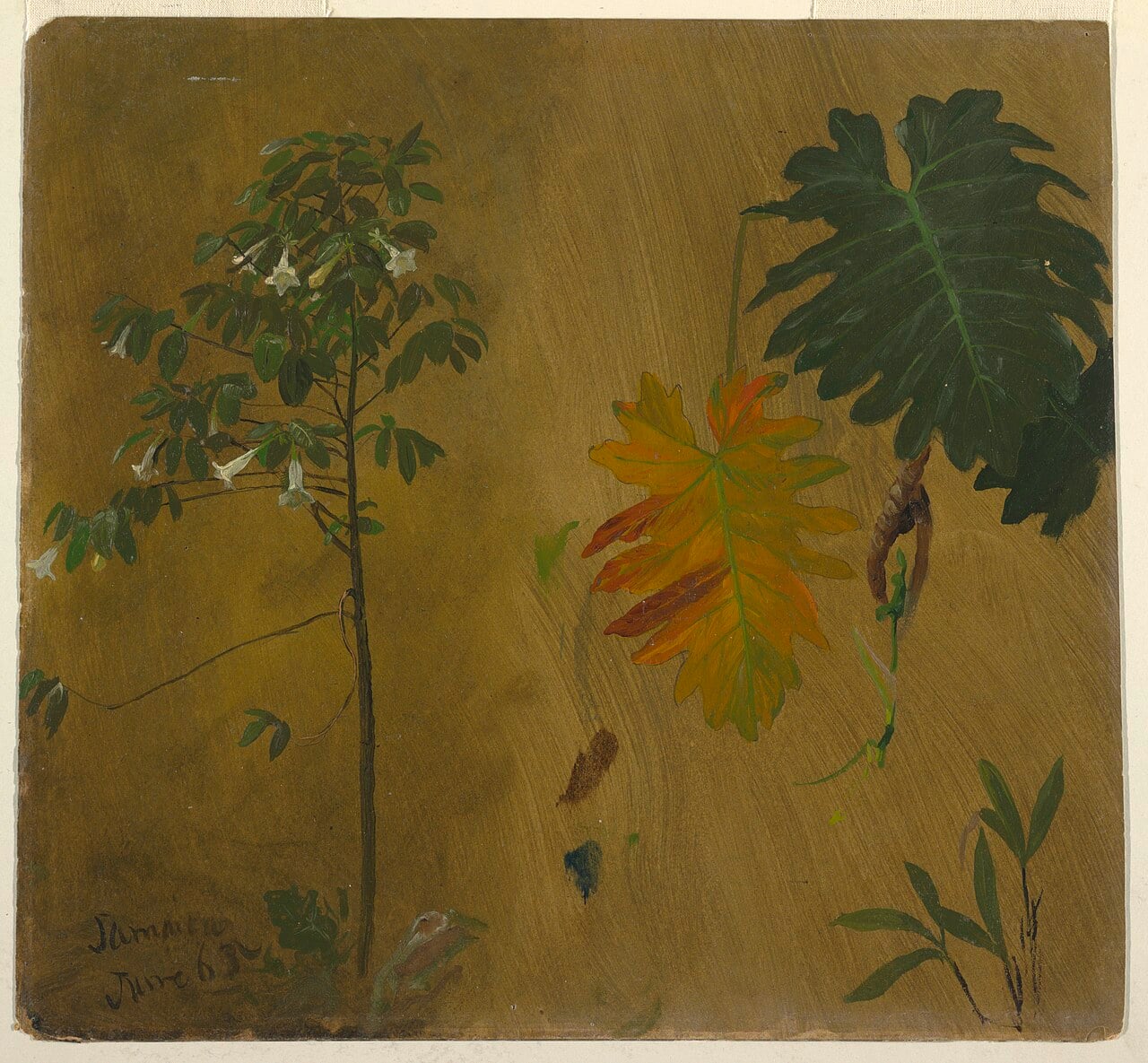
Featured image: Botanical Studies from Jamaica, West Indies, June 1865, by Frederic Edwin Church. Cooper Hewitt, Smithsonian Design Museum, Gift of Louis P. Church. Public domain, via Wikimedia Commons.