A Village on Its Own Terms
At Rastafari Indigenous Village near Montego Bay, Firstman sees preservation as daily work: sustaining a community, passing on knowledge and deciding who shapes its future.
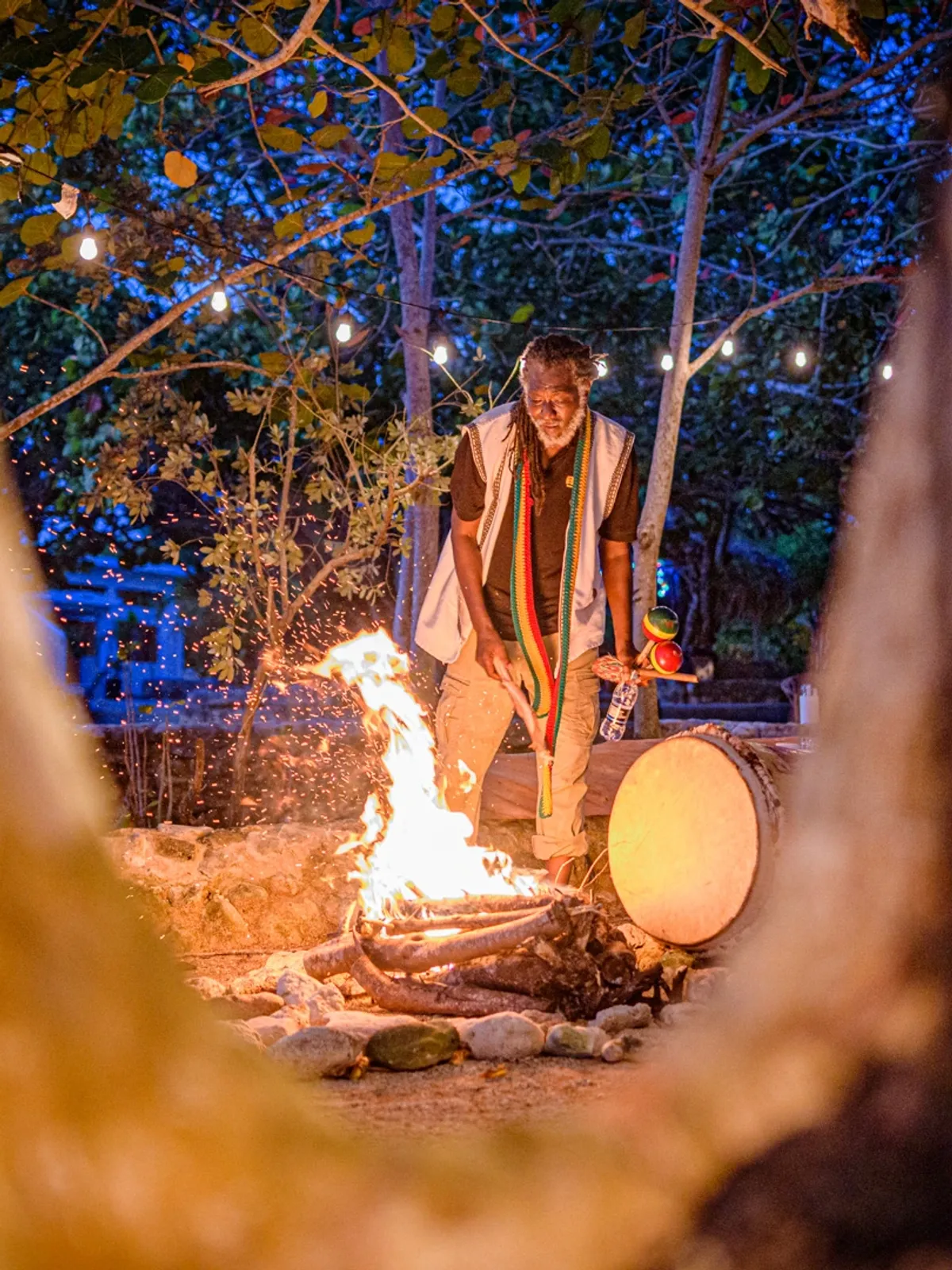
Ask Firstman about the vision behind Rastafari Indigenous Village and he begins with what slavery took away.
He speaks of African people separated and exploited, their labour, knowledge, cultural expression and material resources claimed by others. The Village, in his telling, is a response to that history: a communal space in which people can rebuild relationships and exercise rights that were denied them.
“The village was implemented to establish our social, cultural and economic rights,” he says.
That is a substantial ambition for a place many outsiders might first encounter as a cultural experience. Visitors can arrive curious about the music, the herb or the way of life. Firstman’s concern is what sustains the community behind those encounters, and who has the power to shape it.
A founding member of the Village, he brings together the work of a community organiser, cultural advocate and musician. His answers move between ancestral memory and present-day economics, spiritual conviction and the practical demands of keeping a collective enterprise alive.
He understands the conversation taking place around Rastafari. He also insists that the community must speak for itself.
Beyond the soundtrack
“Reggae music is definitely a fruit of Rastafari.”
For Firstman, the connection is clear: the philosophy, colours and way of life helped nourish the music. But the worldwide reach of reggae can leave listeners familiar with the outward expressions of a culture while knowing little about its daily commitments.
He describes a life grounded in discipline, devotion to family, responsibility to the earth and collective security. His understanding of peace draws on the example and principles of Emperor Haile Selassie I.
These are obligations that must be practised within a community, beyond the moments when an audience is listening.
That distinction matters for visitors, too. Appreciating the sound is an opening. Understanding the people requires attention to how they live, what they value and what they are working to preserve.
A different relationship with herb
The same distance between recognition and understanding runs through the cannabis conversation.
Firstman describes herb as a divine entity, part of a relationship that teaches responsibility and helps people recover a sense of their spiritual purpose. His language is one of reverence, humility and obligation.
That places him at an angle to an industry increasingly organised around what can be extracted, processed and sold.
His concern reaches beyond the commercial value of the plant. He asks what the relationship with it requires of human beings: how they treat themselves, one another and the world they share.
The One Love principle, as he explains it, demands that people learn to celebrate their differences rather than allow those differences to divide them.
Readers need not share his faith to recognise the question underneath it. As ganja becomes an industry, how much room remains for the values of the communities that carried it?
Connecting with the wider world
Firstman is willing to engage with investors and the wider cannabis business. He sees value in bringing people with different interests into the same conversation.
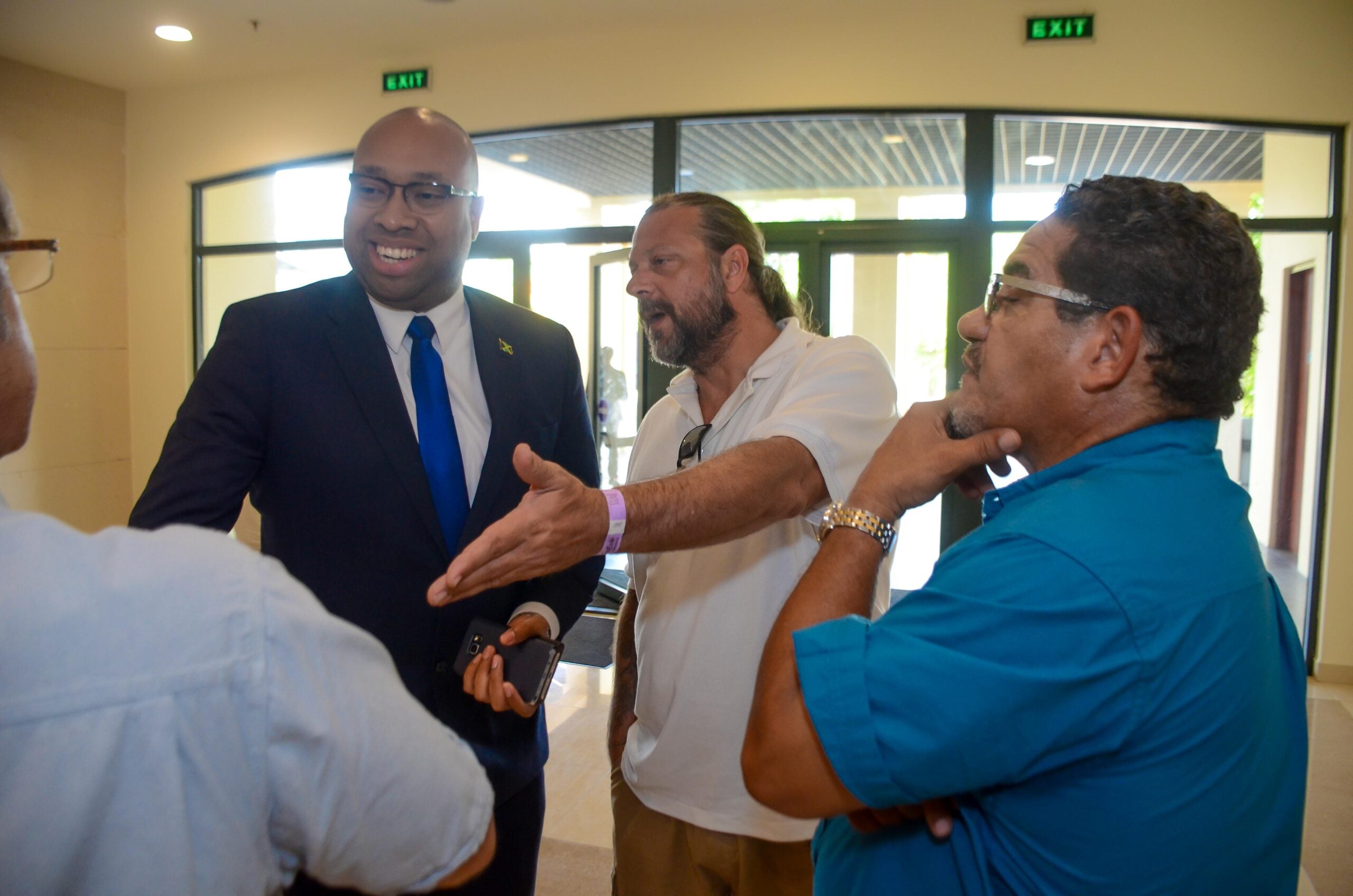
He describes CanEx as a meeting place for thought leaders, practitioners, investors and small businesses navigating Jamaica’s relationship with the global industry.
For the Village, he says, those connections produced something tangible: a deal with cannabis activist and entrepreneur Steve DeAngelo, whom he credits with making a long-term investment in its journey.
It is a specific example of what such encounters can make possible. In Firstman’s account, outside investment and cultural purpose can coexist. The purpose of the Village remains rooted in the community and the rights it was established to exercise.
Still here
Asked what makes him proudest after roughly two decades, Firstman returns to the foundation members and their endurance.
“After Covid 19 and two hurricanes we are still here holding on.”
The sentence carries more weight than a polished account of growth. Survival has required people to keep working through disruption, internal pressures and changing circumstances.
He speaks of elders passing on and younger people contending with the attractions and confusion of the wider world. Preserving a culture under those conditions requires another generation willing to practise it, and a community capable of supporting them.
His confidence in a divine future remains unwavering. So does his commitment to the collective work.
The Village began with a claim to social, cultural and economic rights. Its future depends on keeping those rights meaningful in everyday life: who makes the decisions, how knowledge is passed on, and whether the next generation can see a life for itself there.
Keep reading
ADVERTISEMENT
A DECADE OF CONNECTIONS

Caribbean Wellness
Conference & Expo
Summit Kingston
Kingston, Jamaica