INDUSTRY / SABOTO CAESAR
From Seed to Bank
Saboto Caesar helped shape a banking pathway for medicinal cannabis in St. Kitts and Nevis. For the Caribbean, the bigger question is whether financial access can turn a legal crop into a viable livelihood.
8 minute read · Written interview
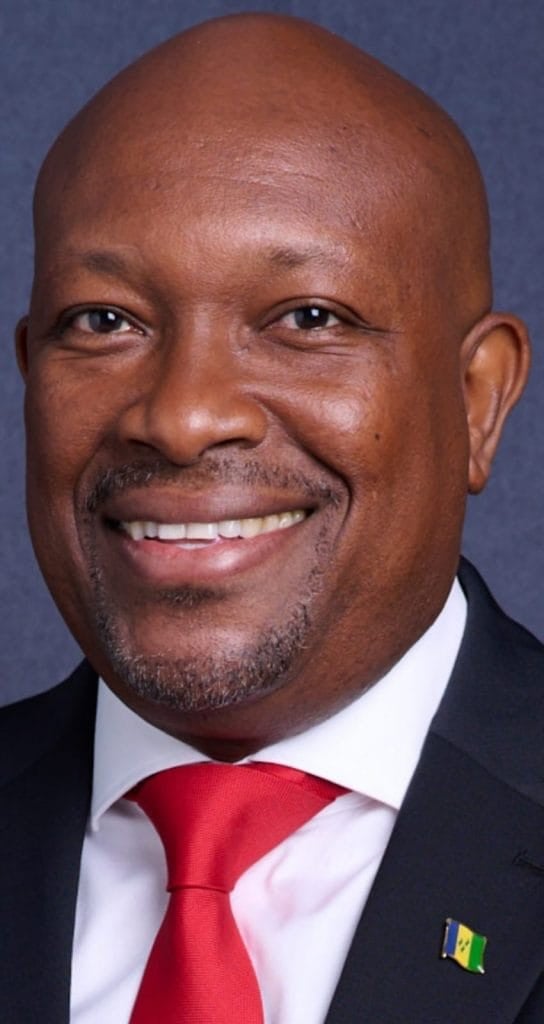
Saboto Caesar
A licence can give a farmer permission to grow. It cannot pay the people working the land, finance an irrigation system or persuade a bank to accept the proceeds of a lawful harvest. Those are separate doors, and an industry can spend years celebrating the first while struggling to open the others.
That gap is the heart of Saboto Caesar’s work on medicinal cannabis banking in St. Kitts and Nevis. The Vincentian attorney and former agriculture minister has been helping connect the rules governing the plant with the financial systems a business needs to function.
In late October, the Federation’s Medicinal Cannabis Authority announced that a major local bank was prepared to accept proceeds and provide services to qualifying licensed cannabis businesses. Its statement identified a meeting with St. Kitts-Nevis-Anguilla National Bank and credited Caesar’s legal and strategic contribution to the process.
For a sector trying to establish itself, the prospect of an ordinary business account is consequential. Caesar’s written answers to CanEx, dated 2 November, explain the bank checks and practical steps behind that opening.
“The central achievement is that the discussion has moved from whether medicinal cannabis can be banked to how it can be banked safely and sustainably.”
Making the money traceable
Caesar describes the turning point as a change in the conversation. Instead of asking banks to look past the risks associated with cannabis, the work focused on showing how those risks could be identified and managed.
That meant taking seriously the questions a bank must ask: who owns the business, where its money comes from, what its transactions represent and whether the institution can preserve the overseas banking relationships on which it depends. A cultivation licence cannot answer all of those questions on its own.
“We did not ask them to disregard those obligations.”
A national track-and-trace system is central to his account. Its purpose extends beyond following plants through cultivation, processing and authorised sale. It is intended to connect those movements to the money behind them, creating a record a regulator or financial institution can examine.
The Federation’s 2022 licensing regulations make that financial connection explicit. Regulation 55 requires transactions associated with a medicinal cannabis business to be recorded in the national tracking system, beginning with the application process, with real-time read access for the Authority. Its categories include investments, loans, salaries, sales and banking.
For Caesar, credible implementation is what could turn a compliance requirement into a commercial foundation. He describes his contribution as legal and strategic guidance, institutional engagement and work to bring the regulatory, financial and operational pieces together. He also credits government, regulators, financial institutions, traditional cultivators, civil society and technical partners.
“The goal was never to eliminate risk; it was to make risk identifiable, documented and manageable.”
An account is only the beginning
The immediate opening, Caesar explains, concerns domestic transactional banking: accounts, deposits, payroll and routine payments. Credit remains a separate decision. A bank willing to receive lawful business proceeds has not necessarily agreed to finance the next crop or lend against a processing facility.
Foreign exchange and international payments are further questions. He sees potential consideration of currencies other than the US dollar as a possible next step, within a phased approach. He does not present that possibility as an available service or a workaround for banking restrictions.
His preferred sequence is to establish compliant accounts and domestic transactions first, then work towards credit, investment services and lawful international payment capabilities over time.
That distinction matters to anyone reading a banking announcement as an investment signal. Being able to handle money and being able to raise it solve different business problems. Neither, on its own, establishes that a crop has a buyer or that the business can sell at a profit.
“The long-term goal is not simply to bank cannabis proceeds but to finance legitimate industry growth.”
The small farmer test
For a large investor, the cost of putting financial records and compliance systems in place may be part of the entry budget. For a traditional cultivator, that same work can be the barrier that keeps a legal opportunity out of reach.
Caesar makes smaller operators a central measure of success. Licences, identification, ownership information, evidence of funding and proper records remain necessary, he says. The challenge is helping people meet those requirements at a cost they can carry.
He says the Medicinal Cannabis Authority will support smaller operators through financial-record training, documentation guidance and business-development assistance.
His emphasis on cooperatives follows the same logic: well-organised groups of traditional cultivators, operating under the Authority’s framework, could provide a platform for smaller businesses to participate. The practical test will be whether that structure lowers the cost of compliance and helps members build dependable enterprises.
“Success cannot be measured only by the number of large investors who can obtain services.”
The point reaches beyond banking. If formal participation requires resources a farmer cannot obtain until after entering the formal market, the pathway risks remaining inaccessible to the people it is meant to include. Support has to reach the business at that starting line.
Why Jamaica should pay attention
Caesar sees a regional lesson in Jamaica’s experience: regulation, finance, producer participation, product standards and market access have to advance together. Licensing alone cannot establish a commercially sustainable industry.
That experience puts a practical question before the region. Can the systems that establish legitimacy also help businesses operate, or will the expense of satisfying them leave smaller producers outside?
Caesar’s answer is to integrate banking early, make requirements clear and proportionate, and invest in research, testing, quality and products with added value. Traceability can support that work, but its credibility depends on implementation. A system purchased is not the same as a system consistently used.
Financing the next harvest
Beyond the account, Caesar points to the costs that determine whether a farm can move forward: irrigation, security, cultivation infrastructure, testing, processing and certification. Without financing, the ability to meet those costs can remain concentrated among people who already have substantial private resources.
He argues for stronger business records and plans, lending products suited to agricultural production cycles, and exploration of credit guarantees, development funds and blended finance. These are proposals for the next stage, not a list of facilities already available under the banking arrangement.
The record of a lawful crop and its transactions could help a business explain itself to a lender. It cannot replace demand, sound management or a credit assessment. The next chapter therefore requires work on both sides of the counter: businesses that can demonstrate how they will earn, and finance designed with a realistic understanding of how they operate.
“Ultimately, the measure of success will not be the number of licences issued, but the sustainable businesses created, livelihoods improved and lasting economic value generated.”
The banking pathway in St. Kitts and Nevis is an opening worth watching. Its lasting significance will be found in what follows: an account that is actually opened, a payroll paid, a farmer able to invest in the next harvest. That is where the promise of a legal industry begins to become a livelihood.
Across the Caribbean
How do cannabis laws differ from island to island? Compare personal possession, medical permissions and the status of regulated markets.
Keep reading
ADVERTISEMENT
A DECADE OF CONNECTIONS

Caribbean Wellness
Conference & Expo
Summit Kingston
Kingston, Jamaica