INDUSTRY & INVESTMENT
After the Green Rush
After the fanfare, the business of building Jamaica’s cannabis industry remains a work in progress.
CanEx editorial
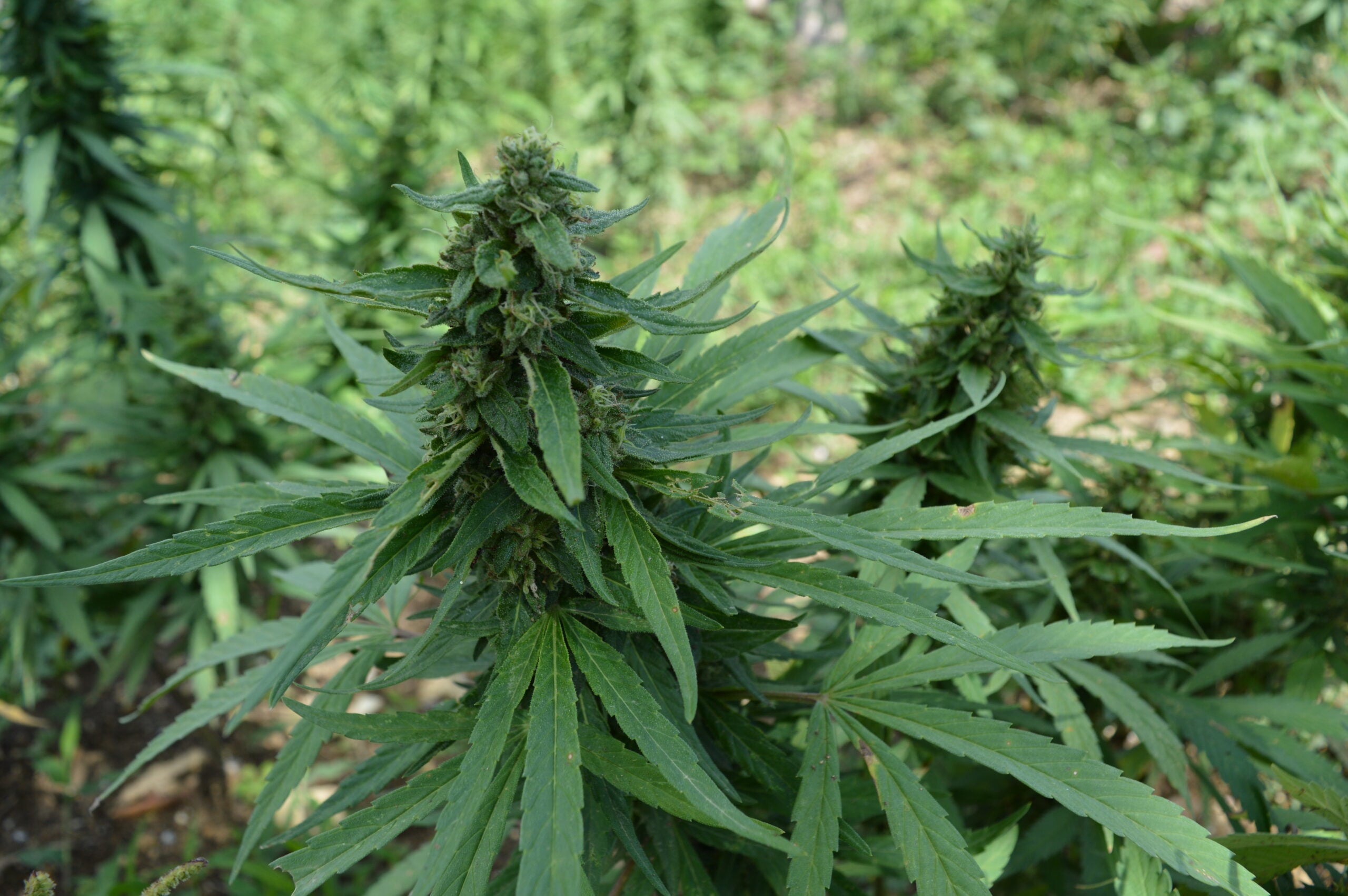
Cannabis growing in Westmoreland, Jamaica, May 2015. Photograph: Cannabis Pictures / Wikimedia Commons, CC BY 2.0.

When Jamaica reformed its cannabis laws in 2015, investors saw an opportunity to build a regulated industry around a reputation the island already possessed. Cultivation knowledge, climate and a global cultural identity made a compelling proposition. Turning those advantages into businesses that could pay their way proved much harder.
More than a decade later, the record includes retail networks, authorised exports and businesses still investing in the market. It also includes investors whose plans did not survive and growers still seeking a place in the regulated industry.
Those realities belong in the same investment story. Understanding Jamaica’s prospects means looking at what the first wave cost, what has been built and what the next round of investment needs to sustain.
The cost of getting started

Wayne Isaacs, founder of Green Stripe Naturals. CanEx archive.
Wayne Isaacs, founder of Green Stripe Naturals, was among those drawn to that opportunity. Looking back, he describes enthusiasm on both sides of the investment table: overseas capital seeking a place in an emerging industry, and Jamaican partners seeing a chance to bring longstanding knowledge and assets into the formal economy.
For Isaacs, cultivation was central to the original attraction. Investors saw Jamaican cannabis as a product with an identity competitors would struggle to reproduce. They also expected an island with a longstanding informal industry to make the transition to regulated production without prohibitive administrative difficulty.
The gap between those expectations and the operating environment was costly. Isaacs identifies banking as a major obstacle to turning committed capital into money an operation could use. That problem was documented at the time: in 2019, the CLA itself described Jamaican banks’ reluctance to handle cannabis transactions because of their relationships with US correspondent banks.
For a business building facilities, hiring staff and preparing a crop, delays affected how long funding had to last before revenue arrived. Where finance was staged, the timing and conditions of each tranche had to fit the licensing and construction timetable. The difficulty was keeping those moving parts aligned.
Isaacs also stresses the value of local knowledge and people able to make decisions on the ground. A partnership had to work through changing conditions after the agreement was signed.
Turning those advantages into businesses that could pay their way proved much harder.
Regulation and its costs
Isaacs recognises why Jamaica approached the industry cautiously. International obligations, banking exposure and the risk of illegal exports created responsibilities that regulation had to address.
His criticism concerns how that framework worked in the early period he describes. He recalls inconsistent approvals and reviews, and requirements whose expense was difficult to reconcile with the financial position of a new operation. Round-the-clock armed security is his clearest example: in his account, operators incurred that cost even when there were no flowering plants on site to generate revenue.
He also describes an export pathway that was insufficiently clear and dependable for the businesses investors had planned. Authorised exports did take place. A ministry report in December 2021 recorded 42 export authorisations to ten entities since 2018, including Kaya’s shipments of oil to the Cayman Islands and flower to Australia. The commercial question was whether businesses could secure access consistently enough, and at a cost that made the trade viable.
Jamaica faced these challenges within a difficult international market. Health Canada’s 2023 review recorded a shift from early shortages to oversupply and difficulty achieving profitability, alongside company closures and investment losses. Problems with regulation and administration mattered, but the wider market was changing too.
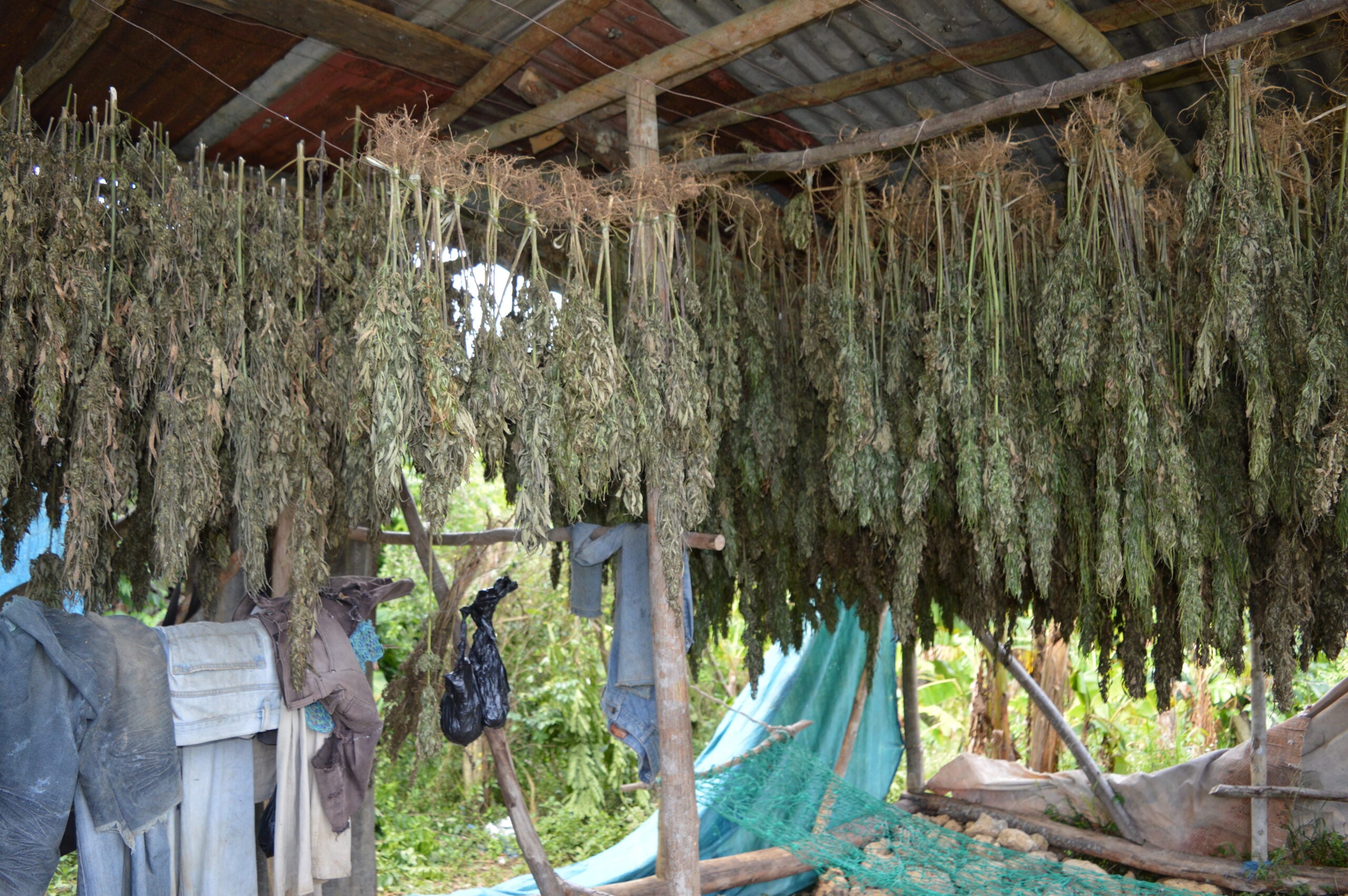
Harvested cannabis hanging to dry in Westmoreland, Jamaica, May 2015. Photograph: Cannabis Pictures / Wikimedia Commons, CC BY 2.0.

Businesses that kept building
The retail footprint is tangible. The Guide’s November 2026 directory includes eight Canna Clinic listings, four JACANA apothecaries and four Kaya locations. These are counts of locations listed in the Guide, not each company’s total network or a measure of market share. Canna Clinic’s own channels advertise a wider island network.
JACANA’s four apothecaries span Kingston, Ocho Rios and Green Island. Kaya’s four locations are in Kingston, Falmouth, Drax Hall and Ocho Rios. For investors, these networks make the discussion more concrete: businesses have committed to premises and routes to customers, rather than relying on the promise of a future market.
NUGL, which operates the Kaya brand, reported revenue of US$1.258 million for the second quarter of 2026. That is a company-reported result across its cannabis, hospitality and food-and-beverage businesses, not a measure of Jamaican cannabis sales alone. It is one operating result within a much larger and uneven industry.
In January 2026, JACANA completed its first medical cannabis export to the Cayman Islands, under permits from the Jamaican and Cayman authorities. The shipment demonstrates a functioning route into a regulated overseas market; its value was not disclosed.
These are concrete achievements in an industry where commercial viability has been hard won. They deserve a place alongside the experience of investors and operators whose plans did not survive.
8
Canna Clinic
4
JACANA
4
Kaya
Locations listed in the Guide · November 2026. Directory coverage, not total company networks.
Farmers still need the means to operate and a dependable market for what they grow.
A framework that is changing
The CLA’s current account places greater emphasis on helping businesses enter and operate within the regulated market. In written responses supplied for this guide in October 2026, chief executive officer Farrah Blake reported more than 208 licences issued across cultivation, processing, transportation, retail, and research and development.
The special-permit programmes introduced in 2026 provide new routes for traditional and small-scale growers. A transitional permit gives individual farmers two years to develop towards full cultivation requirements, while a community permit allows eligible groups to pool resources. Both remove CLA permit fees and provide access to technical guidance and opportunities to sell within the licensed market.
Other announced changes include three-year licence terms, standardised fencing requirements, retailer delivery and expanded business activity during licence extensions. The authority’s outreach programme takes application support into communities, while its Cannabis Specialization Unit provides cultivation guidance before and after licensing.
These measures address practical barriers described by earlier participants. Their value will depend on how they work for applicants and businesses. In her response, Blake identifies sustainable income, reliable buyers and employment within communities as measures of meaningful success.
Who shares in the next chapter
Isaacs does not regard the early investment wave as inherently wasted. His concern is what remained after investors withdrew, and how little room traditional small farmers found in the formal industry.
New permits and support programmes create a way to address that exclusion. Farmers still need the means to operate and a dependable market for what they grow. The same practical test applies to the next investor: whether the funding, operating costs and route to market can support a durable business.
The people who committed money, land and years to the first wave, including those who lost, helped build the industry that exists today. Their experience should inform the next stage. The businesses still operating, and the changes now being made, belong in that account too.
Jamaica’s ganja reputation brought the opportunity into view. Retail networks and authorised exports show that a commercial foundation exists. The next chapter will be judged by who can build a livelihood within the legal industry and retain a meaningful share of the value it creates.
Keep reading
ADVERTISEMENT
A DECADE OF CONNECTIONS

Caribbean Wellness
Conference & Expo
Summit Kingston
Kingston, Jamaica